
Palmdale, CA · Garage Door Service
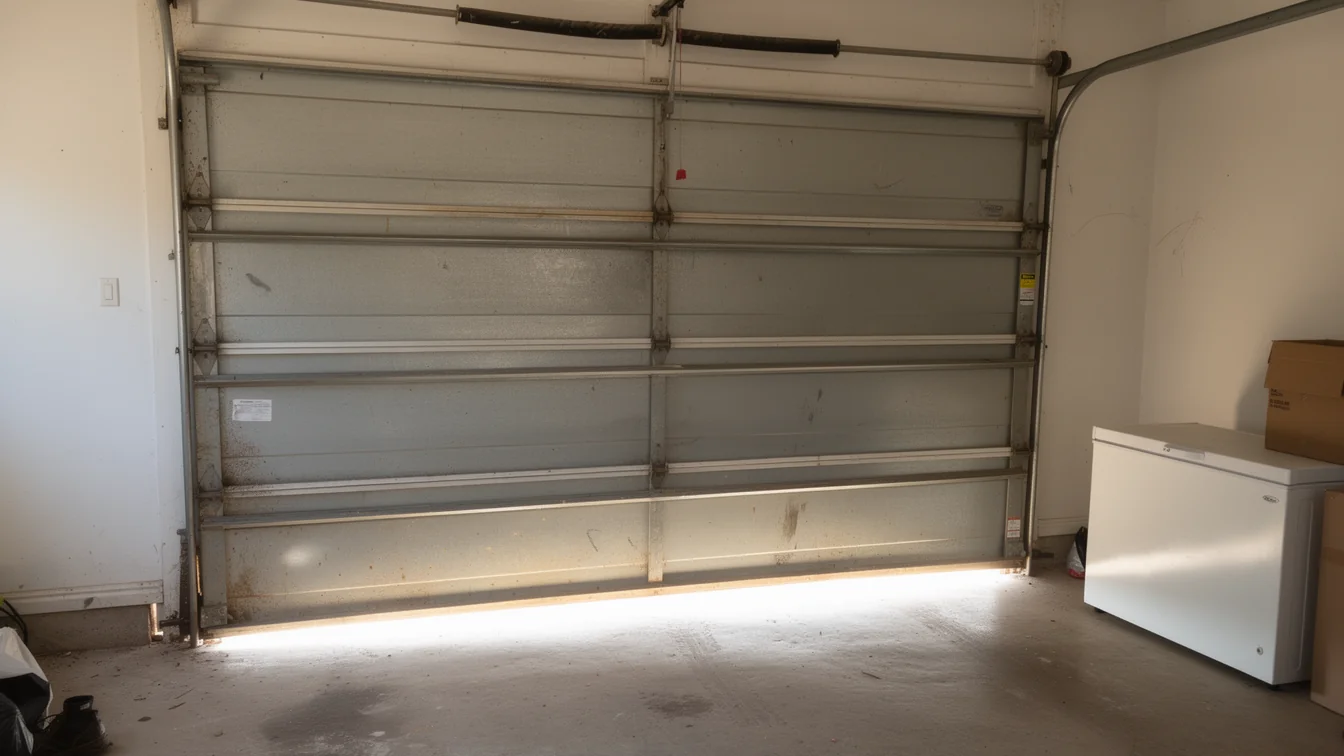
Why So Many Palmdale Garage Doors Have No Insulation at All
Most Palmdale garages went up between 1961 and 1993, before insulation codes applied to doors. Here's what that means for repair, replacement, and heat.
- Repairs & new doors
- Springs & openers
- Serving 8 nearby communities
The Seasonal Bit
Palmdale doesn't get the kind of seasonal swing that cracks a door in half, but the heat here is steady enough to matter over a long summer. Most of the housing stock in this service area went up between 1961 and 1993, with the median build year sitting around 1983. That's well before any insulation requirement touched garage doors specifically. What you've got on a lot of these houses is a single layer of steel or wood, no foam core, no thermal break at the track. In a moderate heat climate like this one, that single-skin door absorbs sun all afternoon and radiates it straight into the garage, and often into whatever room shares a wall with it. The door itself usually still runs fine mechanically. The problem isn't that it's breaking down faster - it's that it was never built to do the thermal job a modern door does. That's a design gap from the era, not a defect, and no amount of lubricant or adjustment fixes it.
What to Check
Start with the skin. If the door is a single layer of steel with no visible foam backing when you look at the inside, it was built to the standard of its decade, not today's. Check the bottom seal - on doors this age it's often the original rubber, cracked and flattened, letting heat and dust in along the slab. Look at the panel edges for rust bloom, especially bottom panels, which on 1980s-era steel doors tend to corrode from the inside out where condensation collects against bare metal. Check the springs too: a torsion spring installed when the house was built in the 80s is well past any reasonable service life, insulated door or not. None of this means the door needs to come out tomorrow. It means you're working with hardware and material from before insulation rules existed, and the checklist has to account for that instead of pretending it's a newer door with an old spring.
The Situation
Across the nine areas we work in - Palmdale and out toward Quartz Hill, Acton, Littlerock, Sun Village, Leona Valley, Agua Dulce, Lake Los Angeles, Green Valley, and Rosamond - the housing is overwhelmingly 1980s and 90s construction, with the oldest pockets going back to 1961. That consistency matters for garage doors because it means almost every house we go to has the same basic door generation: single-skin steel or wood, original or near-original hardware, no factory insulation. With median household income in the area over $94,000, a lot of owners can afford a real upgrade rather than a patch job, and for doors this old that's often the more honest answer. We'll tell you straight when a repair is worth doing and when the door has simply aged out - we don't retrofit foam into an existing steel skin, because it doesn't bond right to hardware built for a hollow panel, and the result rarely holds up.
What the Weather Here Does to It
The climate here sits in the moderate-heat band, which doesn't mean mild - it means consistent. A west-facing single-skin door from the 1983-era housing stock takes direct sun for hours most of the year, and without insulation that heat transfers straight through the panel into the garage air. Steel expands and contracts with that daily cycle more than an insulated door does, because insulated panels buffer the temperature swing on the inside face. Over three or four decades that cycling is part of why original hardware - rollers, hinges, the spring itself - wears out on schedule in this area rather than lasting indefinitely. It's not dramatic weather damage, no hail dents or storm debris. It's slow, steady thermal stress on a door that was never designed to manage it, which is a quieter problem but just as real.
Frequently asked questions
Is my garage door too old to just repair?
Not automatically. If the track, springs, and opener are sound, a worn seal or a dent doesn't mean replacement. But if the door is original to a house built in the 1961-1993 range and has no insulation, repair fixes the mechanics without touching the heat problem - that's a separate decision.
Can you add insulation to my existing door?
We don't retrofit foam into an existing single-skin steel panel - it doesn't bond properly to hardware built for a hollow door and tends to fail. If insulation matters to you, replacing the door with an insulated panel is the straightforward route.
Why does my garage get so hot in summer?
If your house was built in the 1980s or earlier, as most in this area were, your garage door likely has no insulation layer. In a moderate heat climate that means the door absorbs and transfers heat all afternoon, especially on a west-facing wall.
Do you work outside Palmdale itself?
Yes, we cover the surrounding area including Quartz Hill, Acton, Littlerock, Sun Village, Leona Valley, Agua Dulce, Lake Los Angeles, Green Valley, and Rosamond.
Related garage door services in Palmdale
More garage door guides
Book garage door service in Palmdale
Call now or request a quote - tell us what the door is doing and where you are.