
Palmdale, CA · Garage Door Service
When a Spring Goes in Cold Weather, Here's What's Actually Happening
Most Palmdale garages run torsion springs from the 1961-1993 building boom. Here's what cold mornings do to that specific hardware and what to check before it snaps.
- Repairs & new doors
- Springs & openers
- Serving 8 nearby communities
The Seasonal Bit
A torsion spring doesn't care what season it is until the metal itself changes temperature. Steel contracts slightly in the cold, and a spring that's already fatigued loses a little more flex right when the door needs it most on a 6 a.m. open. Here, that matters because so much of the housing stock going up between 1961 and 1993 is still running its original-era torsion setup, or a direct replacement of it. These springs have had three, four decades of cycles already. A cold morning doesn't cause the failure on its own - it's usually the thing that finishes a job the last twenty years of wear started. You'll hear it before you see it: a flat clunk instead of the usual smooth roll, or the door hanging a little crooked on one side as the broken half unwinds. If your opener strains and the door barely lifts a foot before stalling, don't keep hitting the button. That's the motor trying to do a spring's job, and it will burn out trying.
What to Check
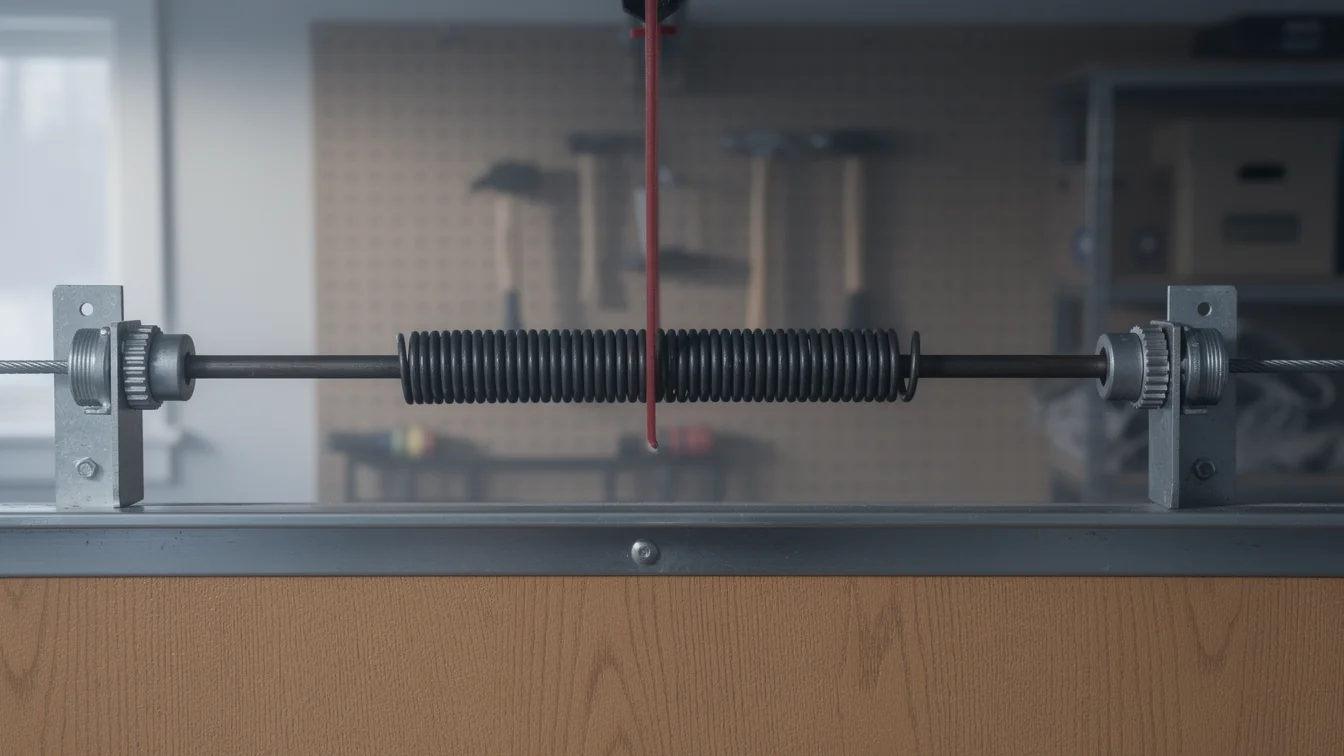
Start with the springs themselves - look for a visible gap in the coil, which means it's already broken and the door is running on cable tension alone, which is not safe to operate. Next, check the cables for fraying near the drum, especially on doors original to the 1961-1993 stock where the hardware has never been swapped. Rollers that are cracked or chipped tell you the track is wearing unevenly, which adds strain back onto the spring. Pull the manual release and lift the door by hand - it should move with one hand and hold its position roughly halfway up. If it drops or shoots up, the spring tension is off and you shouldn't keep running the opener against it. One honest limit here: we don't recommend DIY spring replacement. Torsion springs are under enough load to cause real injury, and it's not a repair we walk homeowners through over the phone.
The Situation
The service area runs across nine named communities - Quartz Hill, Acton, Littlerock, Sun Village, Leona Valley, Agua Dulce, Lake Los Angeles, Green Valley, and Rosamond - covering roughly 22,241 households, about 15,423 of them owner-occupied houses rather than rentals. That owner-occupied share matters for spring calls specifically: a landlord might let a slow door ride for months, but an owner living in the house tends to call the day it stops lifting cleanly. Median household income across the area sits at $94,612, which is part of why replacement, not just patch repair, is often the call people actually choose once a spring goes on a door that's otherwise in rough shape. We'll tell you straight when a repair isn't worth it - if the spring failure happens on a door with cracked panels or a track that's been bent for years, putting a new spring on an old frame just moves the next failure down the road a few months.
What the Weather Here Does to It
The heat here runs moderate rather than extreme, which means summer isn't baking these springs the way it might somewhere with a harsher band, but it's also not doing the metal any favors - repeated warm-to-cool swings over a long season still work on the coil. Combine that with hardware that, across most of the 1980s-90s stock in these nine areas, has never been replaced, and you get springs reaching the end of their practical life right around the first real cold stretch of the year. It's not that cold weather breaks a healthy spring. It's that a spring already near the end of 30-plus years of cycling has nothing left in reserve when the metal stiffens up. If your door is original to a house built in that 1961-1993 window and you haven't had the spring looked at, the smart move is before the first cold week, not during it.
Frequently asked questions
Why did my spring break on a cold morning and not any other time?
The cold itself rarely causes the break. It's more that a spring near the end of its life, which is common on houses from the 1961-1993 building stock in this area, has used up its flex. Cold steel is slightly stiffer, so a spring already fatigued from decades of cycling is more likely to finish failing on a cold morning than a mild one.
Is it safe to open the door by hand if the spring broke?
You can lift it manually using the release cord, but go slow and expect the door to feel heavy and unbalanced, since the spring was doing most of the lifting work. Don't force the opener to keep trying - that just stresses the motor. Call for a spring replacement rather than running the door this way.
How do I know if it's the spring or something else?
A visible gap in the coiled spring, a loud bang at the time of failure, or a door that suddenly feels much heavier to lift are the clearest signs. If the opener runs but the door barely moves, that also points to a spring rather than the motor itself.
Related garage door services in Palmdale
More garage door guides
Book garage door service in Palmdale
Call now or request a quote - tell us what the door is doing and where you are.