
Palmdale, CA · Garage Door Service
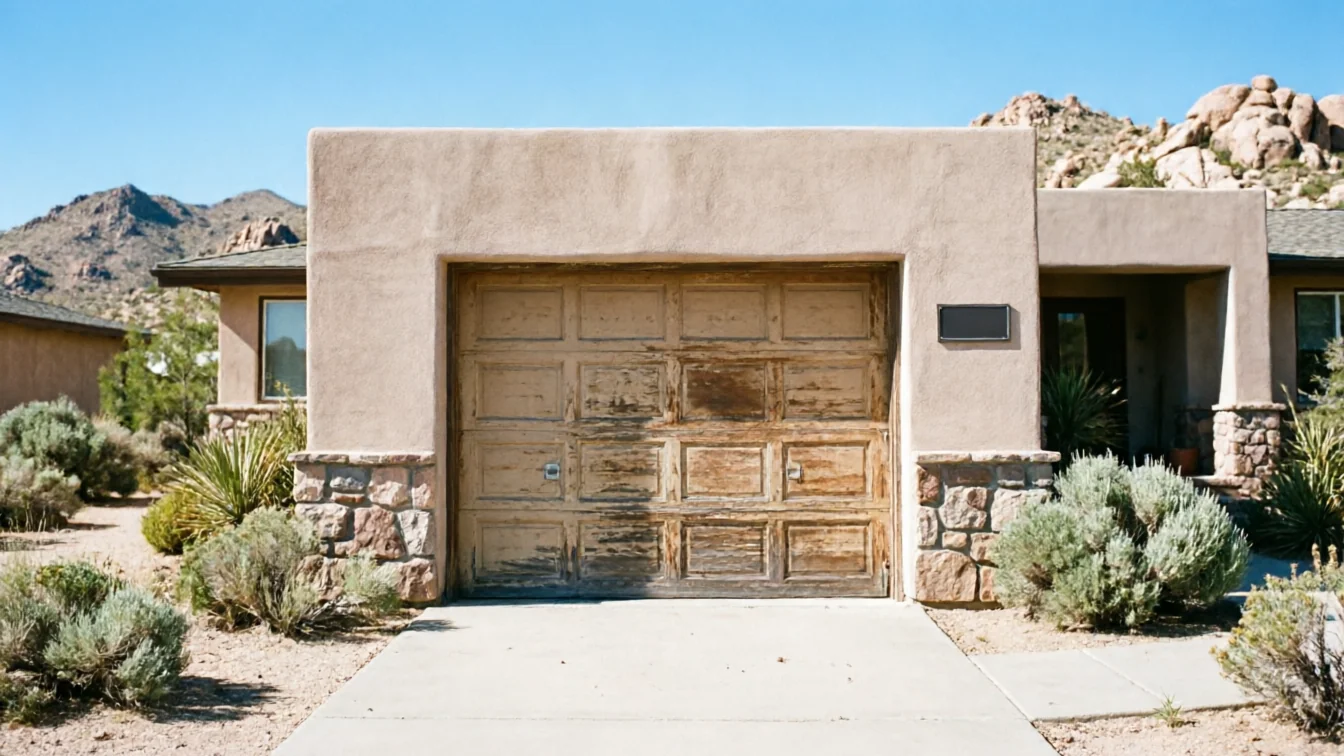
When Does It Make Sense to Fix an Older Garage Door?
Palmdale homes mostly date 1961-1993, many with original 1980s doors. Here's what's worth fixing and what isn't, given our heat and this area's housing stock.
- Repairs & new doors
- Springs & openers
- Serving 8 nearby communities
The Seasonal Bit
There isn't much of a winter stress cycle out here to blame for a door going bad. Our climate band is moderate heat, not the freeze-thaw swing that splits panels and seizes hardware in colder parts of the country. What you get instead is a long stretch of sustained heat every year that works on lubricant, rubber seals, and spring temper over time. The practical upshot is that the best time to look hard at an older door isn't after a storm - it's before the heat really sets in, when a spring that's lost some tension will show it under load instead of snapping without warning later. If your door is original to a house built in the 1980s, a spring check before the hot months is worth doing on its own, not tied to any seasonal emergency. There's no ice to wait out and no freeze to blame a sudden failure on - if something's wrong, it's been wrong for a while and the heat just finishes the job.
What to Check
Start with the springs. A torsion spring on a door from the 1980s or early 90s has had three or four decades of cycles on it, and most are rated nowhere near that. Look for gaps in the coil or a spring that looks stretched compared to its neighbor on a two-spring setup. Next, the tracks - rust or ripple along a track that's original to a 1983-built garage is common, and it's often the actual cause of a door that feels heavy or sticks, not the opener. Check the panels for rust-through at the bottom corners, especially on doors that have never been swapped. Rollers that rattle or bind are cheap to replace and often make an old door feel decent again without touching anything structural. Last, check whether the opener has been replaced more recently than the door itself - that's common, and it means the door's hardware, not the motor, is what's actually aging out. None of this requires tearing into anything; it's a flashlight and five minutes.
The Situation
Across this service area, housing mostly went up between 1961 and 1993, with the median landing around 1983. That's the number that matters more than the door's paint color or how it looks from the driveway. A door and track system installed when a house was built in the early-to-mid 1980s is pushing forty years old in a lot of cases, and across the nine communities we cover - Quartz Hill, Acton, Littlerock, Sun Village, Leona Valley, Agua Dulce, Lake Los Angeles, Green Valley, and Rosamond, all within 8 to 20 miles - that same 1980s-90s stock shows up over and over. With 15,423 owner-occupied houses out of 22,241 households in the area, a real share of garages out here are still running their first door and first opener. That's not a problem by itself. A well-built steel door from that era with sound panels can run for years yet on new springs and rollers. The question isn't age - it's condition of the specific parts doing the work.
What the Weather Here Does to It
Sustained heat doesn't crack a panel the way a hard freeze does, but it does two things slowly: it thins out grease on rollers and hinges faster than people expect, and it fatigues steel springs that are already near the end of their cycle count. A spring that might have lasted another two years in a milder climate can go in one summer out here if it was already close to failing. Lubricant breaks down and track friction goes up, which makes an opener work harder than it should and wears the drive gear early. None of this is dramatic - it's gradual, and that's exactly why an original door from the 1980s often fails with no warning on a hot afternoon instead of showing obvious signs first. If your springs haven't been serviced since the house was built, the heat here is the reason to not wait for a cold snap that isn't coming.
Frequently asked questions
Is it worth fixing a garage door from the 1980s instead of replacing it?
Often yes, if the panels are solid and rust-free. Springs, rollers, and even track sections are straightforward to replace on an older steel door. What pushes a job toward replacement is panel rust-through or a frame that's been bent and straightened more than once - at that point you're paying repair prices for a door that still has structural problems.
How do I know if my door's age is the actual problem?
Check the specific part failing. A heavy or noisy door is usually springs, rollers, or track, not the door panel itself. If the panels are intact and the frame is square, age alone isn't a reason to replace - a lot of 1980s and 90s doors in this area are still structurally fine under new hardware.
Does the heat here shorten spring life compared to other climates?
It can. Sustained high heat accelerates wear on lubricant and can push an already-weak spring toward failure faster than milder conditions would. If your spring hasn't been checked in years and your house dates to the 1980s or early 90s, it's worth a look before the hottest months rather than after.
Related garage door services in Palmdale
More garage door guides
Book garage door service in Palmdale
Call now or request a quote - tell us what the door is doing and where you are.